Field Recording
Microphone techniques, environmental listening, and the ethics of recording in living communities. Includes multi-day sessions in the Blue Ridge Mountains.
12 weeks · September–DecemberEstablished 1987 · Asheville, North Carolina
A private educational archive dedicated to the preservation, study, and creative practice of recorded sound.
Enter the Sound Archive
For nearly four decades, the Blue Ridge Sound Archive has gathered, preserved, and made accessible recordings that document the acoustic character of Appalachia and beyond.
Founded by a collective of audio engineers, folklorists, and documentary producers, our collection spans field recordings from the 1950s to contemporary documentary work. We maintain active research partnerships with universities, public radio stations, and independent sound artists.
Our mission is threefold: to preserve deteriorating media, to train new generations of audio archivists, and to demonstrate that sound—like place—carries memory.
Hands-on instruction in the craft and history of recorded sound
Microphone techniques, environmental listening, and the ethics of recording in living communities. Includes multi-day sessions in the Blue Ridge Mountains.
12 weeks · September–DecemberTransfer from analog media, de-noising, pitch correction, and the philosophy of ethical restoration. Work with our actual archival holdings.
16 weeks · January–MayStudy how spaces, technologies, and social practices have shaped what we record and how we listen. Seminar format with original source materials.
8 weeks · Flexible schedulingSound design for non-fiction film and radio. Collaboration with filmmakers, field producers, and our archive's documentary collection.
14 weeks · September–DecemberBrowse selected collections from our archive
Recorded at 5:15 AM from a ridge above Palmer Creek. Part of a longitudinal study of avian migration patterns in high-elevation Southern Appalachian forests. Equipment: Nagra IV-S, Sennheiser MKH 416.
Recording Conditions: Temperature 54°F, wind 2-3 mph from the west, 85% humidity. No precipitation.
Notable Species: Veery, Wood Thrush, Black-throated Blue Warbler, Ovenbird.
Conservation Status: Several species documented here have since declined significantly in the region.
Archive Note: Original 1/4" tape showing slight oxide shedding. Transferred to digital 2019.
Interviews conducted by Dr. Helen Abernathy with employees of the Clinchfield Cotton Mill, documenting working conditions, labor organizing, and community life prior to the 1977 closure. Part of the Southern Labor Archives partnership.
Interviewees: 34 individuals, ages 42-78, including former union organizers, millwrights, weavers, and community members.
Historical Context: The Clinchfield Mill closed in 1977 after 67 years of operation, displacing 1,200 workers. These interviews were conducted six months before the closure announcement.
Access: Full transcripts available. Audio restricted to in-archive listening due to sensitive labor history content.
Continuous ambient recording from the main concourse during the final year of passenger service. Captures the acoustic architecture of the 1905 Beaux-Arts terminal—footsteps on marble, steam whistles, PA announcements, and the Southern Railway's last long-distance runs.
Equipment: Uher 4000 Report-L with stereo pair of AKG D130 microphones, positioned at the mezzanine level.
Acoustic Notes: Reverberation time (RT60) measured at 4.2 seconds in the main concourse. The station's barrel-vaulted ceiling created distinctive slap echoes.
Historical Note: The final Southern Railway passenger train departed September 1968. The station was demolished in 1969; this is the only comprehensive acoustic document of the space.
Comprehensive documentation of East Tennessee & Western North Carolina Railroad steam operations, including No. 12 ("Tweetsie") under load, yard switching, and maintenance sequences. One of the earliest systematic recordings of American narrow-gauge steam.
Recording Engineer: Robert C. Byrd, freelance audio technician for WBTV Charlotte.
Equipment: Presto PC-102 disc recorder, Altec 633A "Salt Shaker" microphone. Original 16" lacquer discs.
Condition: Significant surface noise on 1952 discs. 1963 recordings in excellent condition. Full restoration completed 2015.
Significance: Used in the Smithsonian's "Steam in America" exhibition and Ken Burns' "The West."
Overnight recording from the rim of Linville Gorge, capturing the transition from dusk chorus through midnight insect activity to pre-dawn wind patterns. Part of the "Acoustic Wilderness" project documenting undisturbed natural soundscapes before increased regional development.
Recording Site: Hawksbill Mountain, elevation 4,009 feet. Microphones positioned 50 feet from cliff edge.
Notable Events: Distant thunder at 2:47 AM (no rain at site); barred owl duet at 11:15 PM; coyote group vocalization at 4:30 AM.
Equipment: Sony DAT-TCD10, Schoeps CMC5 stereo pair, custom windscreens.
Current Status: Site now within 3 miles of major highway. This recording represents a significantly quieter acoustic environment than exists today.
Conversational Cherokee, traditional stories, and ceremonial songs recorded with first-language speakers born before 1900. Conducted in partnership with the Cherokee Preservation Foundation and the Museum of the Cherokee Indian.
Speakers: 12 individuals, all fluent first-language speakers. Average age at recording: 78. All have since passed.
Content: Traditional stories (including the complete Kana'ti and Selu cycle), medicinal plant knowledge, Christian hymns in Cherokee, and conversations about 20th-century community changes.
Access Protocol: Some materials restricted per tribal cultural protocols. Researchers must apply through the Cherokee Heritage Center.
Preservation: Original 1/4" tapes; significant vinegar syndrome detected 2003. Emergency baking and transfer completed 2004. Now stored in climate-controlled vault.
Student research projects from our documentation programs
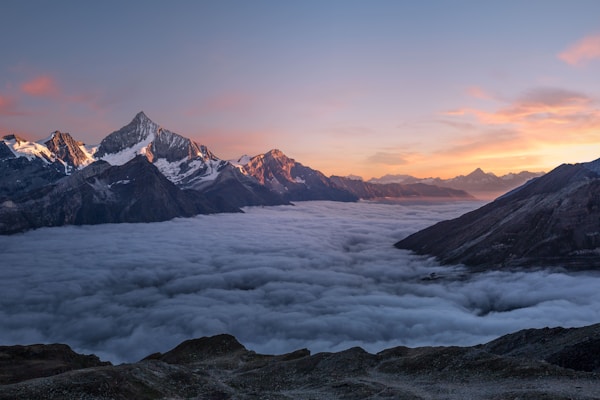
A comparative study of dawn choruses at six elevations from 2,000 to 6,000 feet along the Roan Mountain massif. Demonstrates how temperature inversions create distinct acoustic zones within short horizontal distances.
"The transition at 4,200 feet was abrupt—below, ovenbirds and wood thrushes dominated; above, hermit thrushes and dark-eyed juncos. The inversion layer acted as an acoustic ceiling, trapping lower-frequency sounds in the valleys."
Equipment: Sound Devices 702, Sennheiser MS setup. Wind was the primary challenge above treeline; custom blimps essential.

Impulse response recordings and ambient documentation of eight rural churches built 1880–1920. Examines how vernacular architecture shapes congregational singing and whether acoustic character influences musical style.
"The unheated churches in December had RT60 times 40% longer than summer measurements—cold air, empty pews, closed windows. The congregation's body mass was itself an acoustic treatment."
Most surprising: the 1897 church with curved pine ceiling performed similarly to much larger European spaces. The builder had no formal training; the shape was pragmatic, not aesthetic.

Emergency salvage and partial recovery of a community radio station's archive after the 2021 Haywood County floods. 340 cassettes and 80 reels submerged for 72 hours. Documents recovery protocols and ethical decisions about what to prioritize.
"The water was creek water, not clean floodwater—sediment, sewage, hydrocarbons. We had 48 hours before mold would be irreversible. Decided to prioritize unique content over better-preserved duplicates."
Best recovery technique: gentle warm water rinse, then isopropyl alcohol, then vacuum drying. Never heat above 110°F. Lost 23% of collection but saved irreplaceable 1985 flood interviews—poetry, not data.

Documentation of the National Radio Quiet Zone surrounding Green Bank Observatory. Measures and maps the last large area of electromagnetic and acoustic quiet in the eastern United States, under threat from proposed cellular expansion.
"At the exact center, on a still night, the threshold of hearing becomes strange. I could hear my own heartbeat, the blood in my ears, the creak of my eyeballs. Recording equipment self-noise became the dominant signal."
The zone's acoustic character is defined by absence—no distant highway rumble, no aircraft, no electrical hum. The 60Hz ground loop that haunts every urban recording: gone. What remains is insect life, wind through spruce, and the extraordinary sensitivity of ears unmasked.

Spatial audio documentation of Linville Falls and five comparable Southern Appalachian waterfalls. Examines how falling water creates unique acoustic environments—masking zones, reverberation chambers, and frequency-specific dampening.
"Behind the main drop, the sound becomes strangely tonal—white noise filtered by the rock overhang into something approaching a chord. Different positions produce different fundamentals. I mapped them like a scale."
The Plunge Basin, 300 feet below, was the most complex space: direct sound, reflected sound, and mist-borne high frequencies arriving at different times. A natural convolution reverb with wetness control.

Reconstruction of early radio broadcasting in the Southern Appalachians, 1923–1940. Combines surviving recordings, station logs, and oral history to document how mountain music was performed, captured, and transmitted in the medium's first decades.
"The 'hillbilly' music broadcast from Asheville in 1928 was not folk music in the modern sense. It was professional entertainment, carefully arranged for the microphone's limitations. The 'authenticity' was itself a performance."
Most valuable find: a 1936 station engineer's notebook describing microphone placement for string bands—distance, angle, room treatment. A lost manual of early music recording craft, never published.
Before and after: techniques for recovering damaged recordings
Community sing-along, severely degraded by oxidation and previous playback with worn stylus.
Oral history interview, submerged in basement flood for 48 hours. Mold damage, tape sticking, severe high-frequency loss.
Visit the archive or inquire about programs

Email [email protected]
Phone +1 (828) 555-3167
Address
10 College St
Asheville, NC 28801
USA
Hours
Tuesday–Saturday
10:00 AM – 4:00 PM
Or by appointment
The archive welcomes researchers, students, and interested listeners. We do not sell recordings or offer commercial services. Our facilities include two listening rooms, a transfer suite, and a small reference library. Advance notice is appreciated for visits exceeding two hours.